Créez, Osez, Soyez Passionnés !


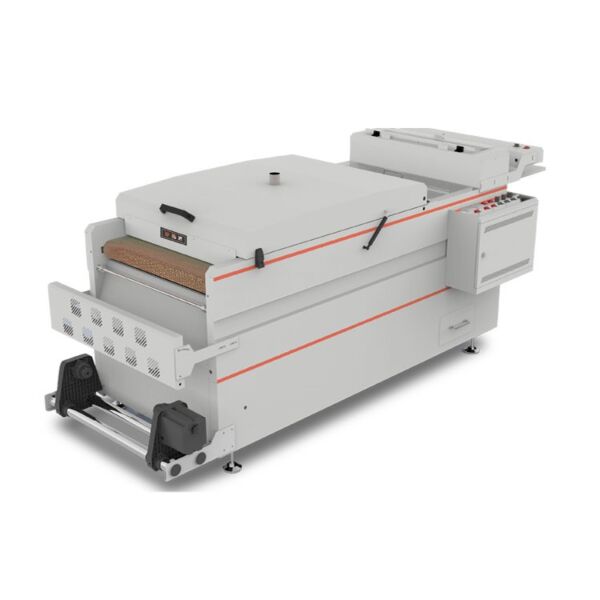


Poudreuse CT600s 60 cm Ultra Rapide et séchage - Pour imprimante DTF 4 têtes
7 980,00 € 6 650,00 €
Disponibilité : Livré sous 1 à 3 jours
SKU
ZHS_H6501
Découvrez l'une de nos dernières nouveautés : la poudreuse dédiée à l'impression DTF (Direct To Film) !
La technique DTF est aussi simple que son nom l'indique et réside en quelques étapes seulement. Une fois votre visuel imprimé sur le film, déposez une couche de poudre thermofusible sur celui-ci, avant de le sécher et de le presser.
Grâce à cette poudreuse, réalisez des marquages de qualité à moindre frais ! Allant jusqu'à une largeur de 60cm, elle conviendra à tous les formats ! Elle vous permettra ainsi de déposer de la poudre de manière uniforme et sans vide sur votre film. Il s'agît de la machine la plus rapide et la plus efficace du marché.
Cette poudreuse est recommandée pour les imprimantes DTF 4 têtes !
Les avantages produit :
- Compatibilité universelle
- Simple d'utilisation et moins de main d'oeuvre
- Pas besoin de découpe
- Pas de gaspillage grâce au collecteur de poudre
- Absence de bordure
- Dispose d'un plateau de chauffe pour sécher la poudre après dépôt
Ce produit est disponible en pré-commande ! Alors n'attendez plus et soyez le premier à vous équiper en DTF !
Cet article ne peut pas être expédié en express. Merci de ne pas choisir ce mode de livraison. La livraison peut prendre 4 à 5 jours ouvrés.
Cet article ne peut pas être expédié en express. Merci de ne pas choisir ce mode de livraison. La livraison peut prendre 4 à 5 jours ouvrés.
Caractéristiques :
Dimensions du colis : 2400 x 1200 x 1136mm
Dimensions de la machine (plateau de chauffe plié) : 2306 x 1092 x 1102 mm
Dimensions de la machine (plateau de chauffe déplié) : 2806 x 1092 x 1102 mm
Poids de la machine : 300Kg
Poids de la machine : 210Kg
Alimention : 220V - 39A
Puissance Max : 6,8KW
Consommation électrique : 3KW - 6,8KW

La technique DTF est aussi simple que son nom l'indique et réside en quelques étapes seulement. Le concept est simple : imprimez sur un film et transférez directement sur tissu. Son principal avantage est de pouvoir réaliser des marquages sur tout type de textiles. Qu'il s'agisse de polyester, de coton, de soie ou de fibres synthétiques, la technique d'impression DTF saura s'adapter.
L'un des atouts de l'impression DTF est qu'elle ne nécessite pas d'investissement financier important ou de pré-requis particulier. Que vous soyez familier avec l'impression numérique et que vous souhaitiez passer à l'impression DTF pour diversifier votre activité, ou alors que vous partiez de zéro, le matériel nécessaire restera le même :
- Imprimante directe sur film - Ces imprimantes sont souvent appelées imprimantes modifiées DTF. Elles sont dotées de réservoirs d'encre 6 couleurs de base comme Epson L1800, etc. Cela offre un fonctionnement pratique car les encres CMJN DTF peuvent entrer dans les réservoirs CMJN standard tandis que les réservoirs LC et LM peuvent être remplis avec des encres DTF blanches. Les rouleaux utilisés pour faire glisser la page sont également retirés pour éviter les « doublures » sur la couche blanche imprimée sur le film DTF.
- Films - Les films PET sont utilisés dans le processus d'impression DTF. Ces films sont différents de ceux utilisés en sérigraphie. Ceux-ci ont une épaisseur d'environ 0,75 mm et de meilleures capacités de transfert. Sur le marché, ils sont souvent appelés films de transfert DTF. Les films DTF sont disponibles sous la forme de feuilles coupées (elles peuvent être utilisées pour une utilisation à petite échelle) et de rouleaux. Une autre classification des films PET est basée sur le type de pelage qui est effectué après le transfert. Sur la base de la température, il existe 2 types de films : les films de type pelage à chaud ou les films de type pelage à froid.
- Logiciel - Le logiciel est une partie importante du processus. Les caractéristiques d'impression, les performances couleur des encres et les performances d'impression finales sur le tissu après le transfert sont déterminées par le logiciel. Pour l'impression DTF, il faut un logiciel RIP spécialisé capable de gérer les couleurs CMJN et blanches. Le profilage des couleurs, les niveaux d'encre, la taille des gouttes et d'autres facteurs contribuant à un résultat d'impression optimisé sont tous régis par le logiciel d'impression DTF.
- Poudre adhésive thermofusible - La poudre d'impression DTF est de couleur blanche et agit comme un matériau adhésif qui lie les pigments colorés de l'impression aux fibres du tissu. Il existe différentes qualités de poudres thermofusibles DTF qui sont spécifiées en microns. Une note appropriée doit être choisie en fonction des exigences.
- Encres d'impression DTF - Ce sont des encres pigmentées spécialement conçues pour cette technique et disponibles dans les couleurs cyan, magenta, jaune, noir et blanc. L'encre blanche est un composant spécial qui se dépose sur le film et sur laquelle le dessin coloré est imprimé.
- Agitateur de poudre automatique - Il est utilisé pour appliquer la poudre uniformément et également pour éliminer l'excès de poudre.
- Four de durcissement - Il est essentiel d'utiliser un petit four industriel pour faire fondre la poudre thermofusible appliquée sur le film de transfert. Une presse à chaud peut être une alternative pour cette opération, mais elle doit être utilisée en mode sans contact.
- Presse à chaud - La presse à chaud est utilisée pour faire adhérer l'image imprimée sur le film, sur le tissu. Elle peut également être utilisé pour chauffer la poudre thermofusible sur le film DTF comme expliqué précédemment.
Les étapes de l'impression
Étape 1 - Impression sur film
Au lieu d'utiliser un papier ordinaire, insérez le film PET dans les bacs de l'imprimante. Vous devez paramétrer dans votre logiciel l'impression des couleurs en premier. La couche de blanc vient s'imprimer par dessus les couleurs sur votre film PET. Un point également important à retenir est que l'impression sur le film doit être une image miroir de l'image réelle qui doit apparaître sur le tissu.
Étape 2 – Poudrage
Cette étape consiste à appliquer la poudre thermofusible sur le film contenant l'image imprimée. La poudre doit être appliquée uniformément lorsque l'impression est humide. Veillez à éliminer l'excès de poudre doit être soigneusement élimininé.Une façon simple de s'assurer cela est de maintenir le film sur ses bords courts de sorte que ses bords longs soient parallèles au sol (orientation paysage). Il faut verser la poudre au milieu du film de haut en bas de sorte qu'elle forme environ un tas d'un pouce d'épaisseur au centre, du haut vers le bas. Récupérez le film avec la poudre et pliez-le légèrement vers l'intérieur de sorte qu'il forme un léger U avec la surface concave tournée vers soi. Maintenant, secouez très légèrement ce film de gauche à droite pour que la poudre se répande lentement et uniformément sur toute la surface du film. L'une des alternatives est d'utiliser des agitateurs automatisés disponibles pour les configurations commerciales .
Étape 3 - Faire fondre la poudre
Cela peut être fait de plusieurs façons. Le moyen le plus courant consiste à placer le film avec l'image imprimée et la poudre appliquée dans le four de polymérisation et à les chauffer. Si cela n'est pas possible, utilisez une presse à chaud et rapprochez le haut de la presse du film sans le toucher. Il doit y avoir un espace d'environ 4 à 7 mm entre le film et la plaque supérieure de la presse à chaud. On peut utiliser un fil métallique pour fixer le dessus de la presse de sorte qu'elle ne se referme pas totalement sur le film et laisse un espace nécessaire. Pour de meilleurs résultats, il est fortement recommandé de suivre les spécifications du fabricant pour la fusion de la poudre. En fonction de la poudre et de l'équipement, le chauffage se fait généralement pendant 2 à 5 minutes avec la température autour de 160 à 170 degrés Celsius.
Étape 4 - Pré-pressage
L'étape consiste à pré-presser le tissu avant le transfert de l'image par le film pendant 2 à 5 secondes. Cela permet d'aplatir le tissu et d'assurer également la déshumidification du tissu. Le pré-pressage permet un transfert optimal de l'image du film sur le tissu.
Étape 5 – Transfert
C'est le cœur du processus d'impression DTF. Le film PET avec l'image et la poudre fondue est placé sur le tissu pré-pressé, dans la presse à chaud. Ce processus est également appelé «durcissement». Le durcissement est effectué à une température de 160 à 170 degrés Celsius pendant environ 15 à 20 secondes.
Étape 6 - Peeling à froid
Il est important que le tissu et le film maintenant adhéré, refroidissent à température ambiante avant de retirer le film. Une fois le film refroidi, il doit être décollé du tissu.
Étape 7 - Post-pressage
Il s'agit d'une étape facultative mais très fortement recommandée pour de meilleurs résultats. Elle permet d'obtenir des meilleures performances telles que la résistance au lavage et au frottement. Dans cette étape, le textile avec le motif transféré est pressé dans la presse à chaud pendant environ 10 à 15 secondes.
Avantages de DTF :
- Fonctionne avec presque tous les types de tissus
- Ne nécessite pas de prétraitement
- Excellente résistence au lavage
- Le tissu a un toucher très léger
- Le processus est plus rapide et moins fastidieux que l'impression DTG
Par rapport à l'impression par sublimation, l'éclat des couleurs est moins dense.
Créadhésif propose actuellement des encres DTF de qualité compatibles avec la majeur partie des imprimantes DTF. Nos encres sont reconnues en particulier pour leur efficacité à faire ressortir les teintes les plus délicates sur les tissus de couleurs claires et foncées. Le blanc apporte une densité appropriée aux couleurs imprimées avec une consommation d'encre optimale.
De maniére générale, on peut affirmer que l'impression DTF permet de s'affranchir de pratiquement toutes les contraintes qui sont souvent rencontrées dans d'autres techniques d'impression textile. La polyvalence des matières textiles sur lesquelles il est possible de travailler est un réel avantage. Étant donné que le prétraitement n'est pas essentiel, dans de nombreux cas le coût global de l'impression est réduit, offrant ainsi une marge bénéficiaire plus élevée. En conclusion, le processus d'impression DTF peut être considéré comme un moyen efficace de produire des tissus de manière économique.
| Expédition | Livré sous 1 à 3 jours |
|---|---|
| Caractéristiques |
Rédigez votre propre commentaire